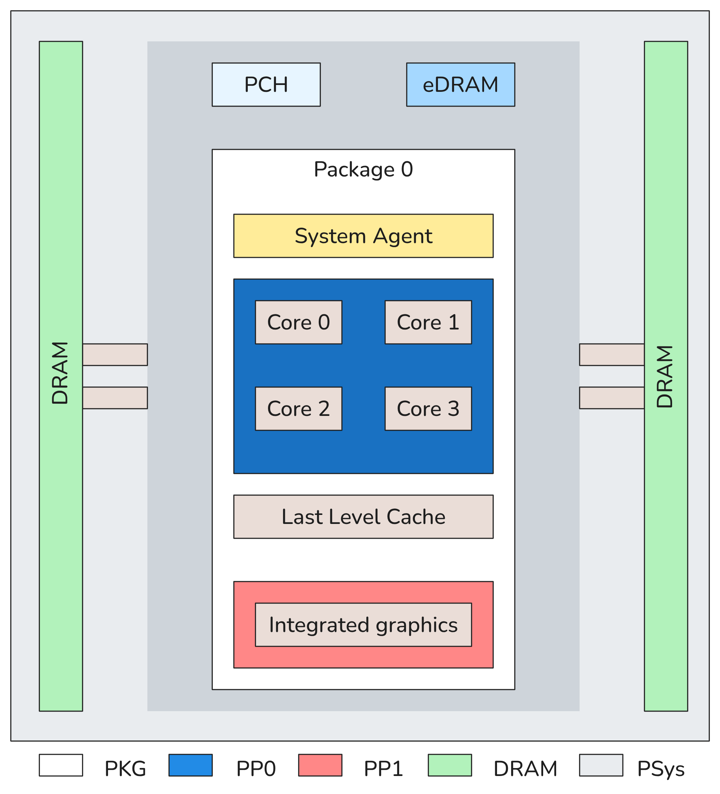
Hardware power limiting
How processors cap their own power. I study Intel RAPL domains, their power limits and time windows, and how they interact with Turbo Boost on real servers.
PhD Candidate · Computer Science
I work on making cloud infrastructures consume less energy, without making them slower.
I am a PhD candidate at IMT Atlantique and Inria, in the STACK team of the LS2N laboratory in Nantes, France. My thesis looks at power management across the whole cloud stack: from the hardware mechanisms that let a processor limit its own power, up to the orchestration layer where Kubernetes decides where and how workloads run.
At the hardware level, I study how Intel RAPL and Turbo Boost really interact on production servers, and build models that predict their behaviour. At the orchestration level, I design Kubernetes components that treat power as a first-class resource. This work relies on large-scale experiments on the Grid'5000 testbed and is carried out partly with Orange Research.
Before the PhD, I trained as a computer engineer at ENSPY in Yaoundé, Cameroon, and spent two years building and running production platforms as a developer and team lead. I am also involved in C5IN, a research and innovation network on cloud, edge and IoT in Cameroon.



Featured work
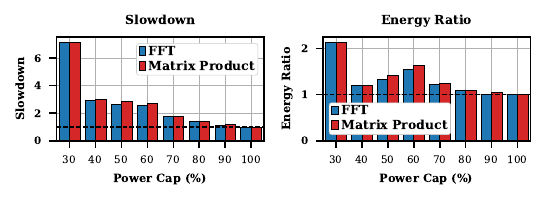
Power capping is the standard way to keep servers within an electrical budget. We measured how Intel's RAPL limits and Turbo Boost actually behave together on four generations of Xeon processors, and what that means for energy.
Research
How processors cap their own power. I study Intel RAPL domains, their power limits and time windows, and how they interact with Turbo Boost on real servers.
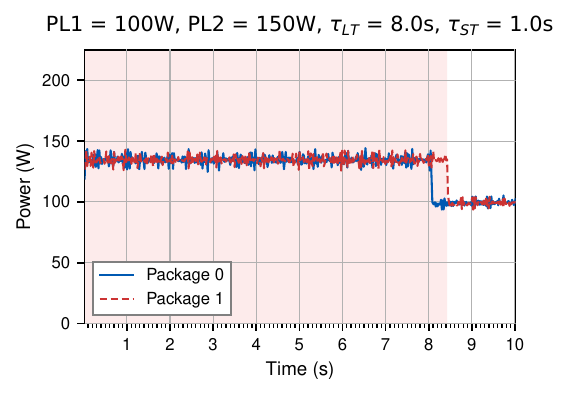
Turning measurements into predictions: analytical models of how long a processor holds its boost, and where power capping stops paying off in energy.
Making power a first-class resource in Kubernetes: node-level capping, automatic server profiling and scheduling that follows real energy use.
Presented our work on Intel RAPL and Turbo Boost at Euro-Par 2026 in Pisa, Italy.
Our Euro-Par 2026 paper was nominated for the Best Paper Award.
Paper accepted at Euro-Par 2026, the 32nd International European Conference on Parallel and Distributed Computing (acceptance rate 26.2%).
Welcoming Clement Obama as M2 research intern, working on reactive control of energy constraints in Kubernetes clusters.
Publications
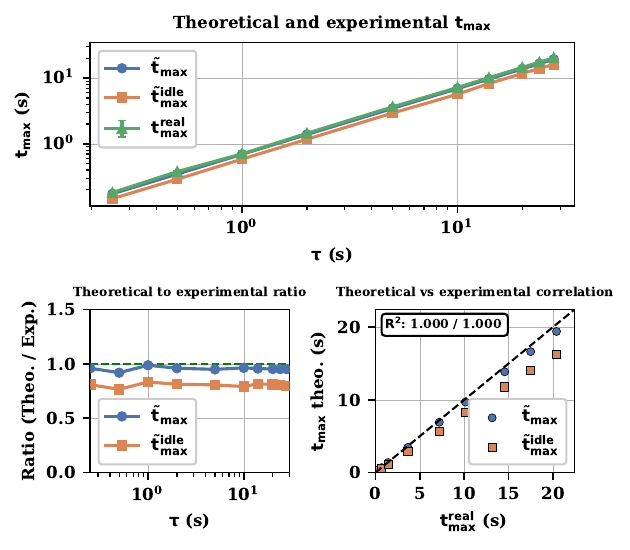
Romial Menra, Guillaume Rosinosky, Remous-Aris Koutsiamanis, Sébastien Bolle, Jean-Marc Menaud
Euro-Par 2026: Parallel Processing, Lecture Notes in Computer Science, Springer, pp. 135-149
Takeaway Only the long-term window and the two power limits drive turbo behaviour; a closed-form model predicts turbo duration on four Intel Xeon generations; capping below half of TDP wastes energy instead of saving it.
Romial Menra, Remous-Aris Koutsiamanis, Jean-Marc Menaud
COMPAS 2024, Conférence francophone en Parallélisme, Architecture et Système, Nantes, France
Takeaway Brings the server’s real power draw, measured through RAPL, into Kubernetes scheduling decisions, so that containers are placed according to actual energy use rather than requested resources.
Talks
Aug 2026
Euro-Par 2026 · Pisa, Italy
Slides →Oct 2025
STACK team seminar · Arzon, France
Related: custom scheduler →Jul 2024
COMPAS 2024 · Nantes, France
Paper →